

If you’re an owner-operator or truck driver based in Minnesota, you’re probably paying more in taxes than you need to. Not because you’re doing anything wrong but because trucking has more legitimate truck driver tax deductions Minnesota than almost any other industry, and most drivers only claim the obvious ones. After 15 years of keeping books for truckers, I can tell you the pattern: the average owner-operator who starts tracking properly finds thousands of dollars in deductions they were missing.
This is the complete list for 2026 what you can deduct, what you can’t, and the Minnesota-specific details that national blog posts skip.
Quick note before we start: these deductions apply to self-employed drivers owner-operators, lease operators, and independent contractors who file a Schedule C or run an LLC/S-corp. If you’re a W-2 company driver, federal law currently does not let you deduct unreimbursed job expenses, so most of this list won’t apply to you (trucker per diem 2026 included) Here is list of truck driver tax deductions Minnesota
1. Per Diem: The Biggest Deduction Most Drivers Get Wrong
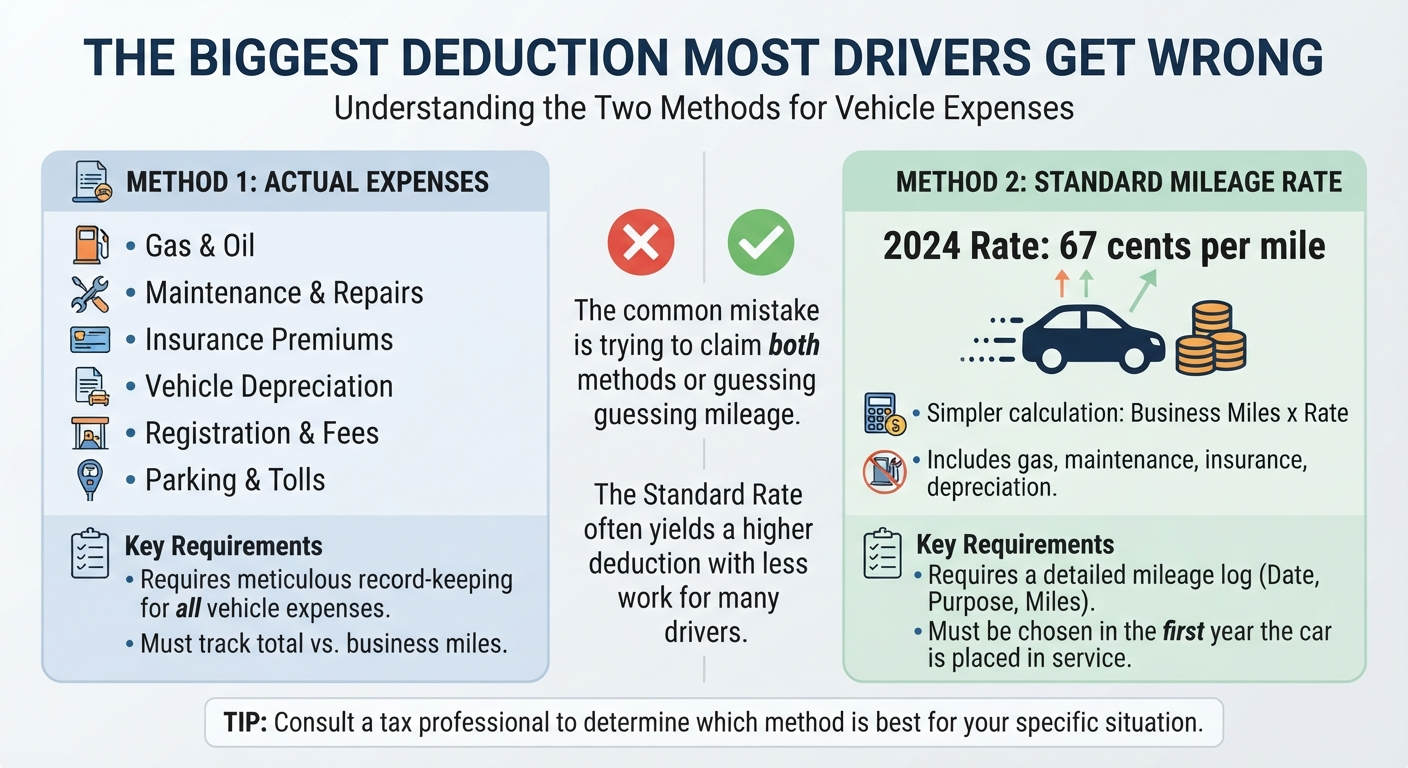
Trucker per diem 2026 covers your meals and incidental expenses while you’re on the road, and for 2026 the IRS transportation-industry rate is $80 per full day within the continental U.S. ($86 per day for travel into Canada). Because drivers subject to DOT hours-of-service rules get a special 80% deduction rate (most businesses only get 50%), each qualifying full day is worth $64 in deductions.
Here’s what that adds up to for a typical over-the-road driver:
- 250 days on the road × $64 = $16,000 deducted from your taxable income
- At a 22% federal bracket plus Minnesota state tax, that’s roughly $4,500–$5,000 in real tax savings from one deduction
To qualify, you must be away from your tax home overnight (or long enough to require rest) and subject to DOT hours-of-service rules. Local drivers who sleep at home every night generally don’t qualify.
What you need: no meal receipts just a reliable log of your days on the road. Your ELD records, logbooks, and settlement statements usually prove this. Partial days (the day you leave and the day you return) count at 75% of the rate.
The Minnesota angle: you’re deducting this on both your federal return and your Minnesota return, so the savings stack. Minnesota’s income tax rates run higher than many states, which makes every deduction on this list worth more to a Minnesota driver than to one in, say, Texas or Florida.
2. Truck Payments, Depreciation & Lease Costs
Your truck is your biggest expense and one of your biggest deductions. How you deduct it depends on how you acquired it:
- If you own it (financed or cash): you deduct the cost through depreciation. Thanks to current federal law, 100% bonus depreciation is available, meaning you can potentially write off the full purchase price of a truck or trailer in the year you place it in service. Section 179 expensing is another option. Which method is better depends on your income this year versus future years this is exactly the kind of decision to make with a professional, because writing everything off in a low-income year can waste the deduction.
- Loan interest on your truck financing is deductible separately.
- If you lease: your lease payments are generally fully deductible as you pay them.
Common mistake: deducting the full truck payment (principal + interest) as an expense. Only the interest is a direct expense the principal gets recovered through depreciation. Doing this wrong is one of the fastest ways to get IRS attention.
3. Fuel
Usually your largest ongoing cost, and fully deductible diesel, DEF, reefer fuel, and additives. Keep your fuel card statements and receipts, and make sure fuel is tracked by state, because you need that same data for IFTA anyway. (If you’re doing fuel tracking twice once for taxes, once for IFTA your bookkeeping system is costing you hours.)
Note: the fuel taxes you pay at the pump are part of your fuel cost and flow into your IFTA reconciliation your quarterly IFTA payments or credits are part of this picture too.
4. Maintenance & Repairs
All of it is deductible:
- Oil changes, preventive maintenance, DOT inspections
- Tires
- Brakes, transmission work, engine repairs
- Washes and detailing
- Roadside assistance and towing
- Parts and shop supplies, even if you do the work yourself (your own labor is not deductible only what you actually spend)
Minnesota drivers: winter takes a real toll on equipment. Block heaters, winter fronts, anti-gel additives, chains, and cold-weather-related repairs are all deductible business expenses. Track them.
5. Insurance
Every trucking-related policy:
- Primary liability and cargo insurance
- Physical damage coverage
- Bobtail / non-trucking liability
- Occupational accident insurance
- The business-use portion of umbrella policies
Health insurance is a special case: if you’re self-employed, your health insurance premiums for yourself and your family are generally deductible not as a business expense, but as an adjustment on your personal return. Many owner-operators miss this one entirely.
6. Licenses, Permits, Registration & Fees
- IRP / apportioned plates and Minnesota registration
- Heavy Vehicle Use Tax (Form 2290 – the $550/year most heavy trucks pay)
- MC authority and DOT fees
- Permits (oversize/overweight, trip permits)
- CDL renewal fees, endorsements, and DOT physicals
- Drug testing consortium fees
- UCR (Unified Carrier Registration)
7. Tolls, Parking & Scales
- Tolls (keep your transponder statements)
- Truck parking fees including paid reserved parking, which more Minnesota drivers are using as parking gets scarce
- Scale tickets (CAT scales add up over a year)
- Lumper fees you pay out of pocket (and aren’t reimbursed for)
8. Communication & Technology
The business-use portion of:
- Cell phone plan (if the phone is essential to dispatch and business most drivers can justify a large business percentage)
- ELD subscription and hardware
- GPS built for trucks
- Load board subscriptions (DAT, Truckstop, etc.)
- Trucking apps, accounting software, and yes, bookkeeping services
- Satellite radio and internet used on the road (business portion)
9. On-the-Road Living Expenses
Life in the sleeper generates deductible costs that drivers constantly forget:
- Bedding, curtains, and sleeper accessories
- Mini fridge, microwave, inverter, CPAP power supplies Coolers and food storage (the equipment meals themselves are covered by trucker per diem 2026)
- Showers (when not free with fuel)
- Laundry on the road
- Work gloves, safety vests, steel-toe boots, and other required gear
- Log books, office supplies, printer/scanner for BOLs
10. Professional Services & Business Costs
- Bookkeeping and accounting fees (yes, our fees are deductible)
- Tax preparation
- Legal fees for business matters
- Factoring fees if you factor your invoices, those fees are a real business expense; deduct them
- Bank and credit card fees on business accounts
- Business formation costs (LLC filing with the Minnesota Secretary of State, registered agent fees)
- Association dues (OOIDA, Minnesota Trucking Association)
- Trucking-related training and continuing education
11. Home Office (Carefully)
If you genuinely use a dedicated space in your Minnesota home exclusively for your trucking business dispatch, paperwork, bookkeeping Services, you may qualify for the home office deduction. The simplified method allows $5 per square foot up to 300 square feet.
The key word is exclusively. A desk in the corner of the living room where your kids also do homework doesn’t qualify. This deduction is legitimate and valuable when it’s real and an audit flag when it’s stretched. Be honest with it.
All these for owner operator tax deductions 2026. If you need further information abut deductions and Bookkeeping Services. You can contact us